
Using Tourist Taxes for West Yorkshire
The Labour government has recently announced plans to grant elected mayors the power to impose an overnight visitors levy, more commonly known as a tourist tax, as part of a move towards greater devolution. The government's vision for this levy is for the money to be raised to help local governments expand infrastructure and transport.
These taxes have become increasingly popular around the world in many different forms. Some countries, like Mexico, impose extra taxes on the cost of airfares when flying into the country (you also have to pay an entrance tax when crossing a land border); other areas, such as Barcelona, impose taxes based on the number of nights stayed in the city.
Whilst West Yorkshire may not be the largest tourist hotbed in the UK, prior to Covid the visitor economy contributed over £2.3bn of visitor spending to the economy, with 3.1 million people spending at least one night in the region and 500,000 of these coming from abroad.
However, the benefits of this to West Yorkshire and especially regional budgets are limited. One of the current problems with tourism in the UK is that a lot of the revenue generated thanks to the tourism industry does not stay in the regions where there are overnight stays, but is lost to the central government.
The only taxes that are raised by local authorities are council tax and business rates, both taxes that are vaguely, but very poorly, linked to the value of property. This means that much of the tourist spending that drives VAT, business revenues and therefore corporation tax and jobs, along with national insurance from employers and staff, is sent to London and is not necessarily used to support West Yorkshire. This does not mean that tourism and the jobs it creates do not provide benefits to the local areas, but it does mean that the industry does not support investment in local infrastructure and the local economy as much as it could.
Tourist taxes are a relatively easy tax to impose. The government's current plan is to introduce a visitor's levy, which is simply an added fee to a hotel, which can either be a percentage of the fee or a flat fee. For the rest of this article, I will make use of the latter of these two options due to its simplicity in calculating how much money could be raised.
I believe that the tourist tax powers do not go far enough in terms of granting local authorities the ability to better leverage tourism to support the local communities they represent. We need to be more ambitious about how we look at supporting local government and using tourism for the benefit of the local community, though exploring more options to raise revenue across a broad sweep of the tourism sector.
The government could grant further powers to local mayors to raise a second tourist tax/environmental levy on flights, in which a small fee is levied for every seat on a plane that enters or leaves an airport. A tax like this would raise money from tourism and offer a financial counterweight to some of the negatives of airports and potential airport expansions (i.e. noise and pollution).
For the rest of this article, I will be proposing the levying of both these tourist taxes at a very modest fee of £1 per bed night (one night that is stayed in a room in West Yorkshire) and £1 per seat on a plane. Based on estimates of current data, these taxes would raise just under £16 million a year, with Leeds Bradford (operating at current capacity) raising around £6 million and the overnight levy raising £9.7 million.
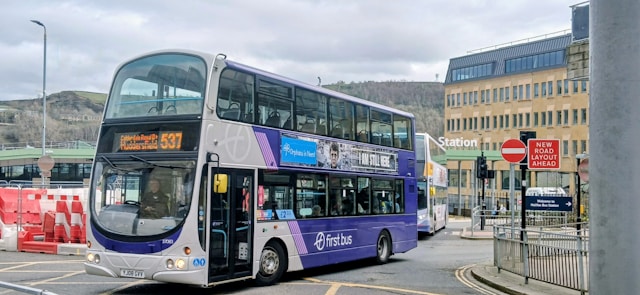
To justify levying a tax, it is important to explore how the money raised will be spent so as to provide the people affected by the tax (primarily the hospitality industry) a counterbalance to the possible negatives. One option as to what this money could be put towards is public transport. The tourism taxes offer a great opportunity to expand local transport in two different sectors: franchised bus services (i.e. the Arriva or First Bus buses) or community transport.
Franchised Bus Services
The West Yorkshire Combined Authority (WYCA) is following the example of Andy Burnham when he was mayor of Greater Manchester and bringing in bus franchising from spring 2027. Franchising means that the Local Transport Authority (WYCA in West Yorkshire) directs which routes and services private companies are to provide. Bus companies can no longer only run services to maximise their profits.
The tourist tax revenues could be used to support this focus on buses.
The West Yorkshire Councils have recently agreed a plan to spend around £90mn on the purchase of 193 electric buses as part of a programme to fully electrify the regional bus network with ,each bus costing around £450,000. In times of tight local government budgets, using revenues from a tourist tax to support this rollout could help reduce the need for the regional government to rely on borrowing and central government grants. This will ensure future investment in the region's public transport is less dictated by the whims of Whitehall.
Community buses
Another option would be to redirect this income into community transport programmes. These offer smaller transport systems than the regional bus networks, but are highly localised and designed to better fit each community. Importantly, this highly localised nature means that they have smaller incomes and expenditure, meaning that the tourist tax could be diverted into a large number of different community transport networks, ensuring that the benefits from the tax could be spread across all of West Yorkshire.
One example of these is the Keighley Community Transport (KCT) group that provides minibus transport for community groups and those with mobility issues. KCT operates on razor thin margins and has been hit repeatedly by crises from Covid to the rolling energy and fuel crises that have hit the UK in the past couple of years. However, their annual expenditure of just £85,000 is just 0.5% of the yearly revenue raised by the tourist tax.
Diverting just some of these revenues to KCT would be transformative for the charity, with Mary Beanland (who helps run the group) saying that government support from tax ‘would save the charity and help to continue our work in the community.’ This outcome would come at very minimal costs, requiring not even the 0.5% of tourist tax revenues needed to cover all the costs. If this support was repeated across West Yorkshire, it could help create a strong network of community transport that helped keep local charities, sports groups and the disabled connected and operational.
Conclusion
Support for these two options is not exclusive. Although each new bus brought to the region would mean less money for community transport, it does not need to be either or. Investment could be directed into both areas, whilst this policy would slightly dilute the impacts that would be felt regionally from investments into the regional bus network, the community transport groups would not need a large portion of the tax revenues to feel transformational improvements.
Photo by Joseph Mama on Unsplash
How Can We Have Bus Services As Good As London and Manchester?
Matthew Topham from the Better Buses West Yorkshire campaign explains who owns and runs our buses at the moment, why our services are so bad …
What do Active Travel Neighbourhoods have to do with student waste?
Community Action on Waste was created in an attempt to pilot long term change to the way our streets are treated; with particular focus on …
Will the North get the transport infrastructure we deserve?
Is this what the Northern Powerhouse means to you? Or does Regional Democracy mean a need to renegotiate the power balance further?
A few thoughts …